0%

A good rear light should be easy to notice, simple to mount, and dependable when a ride runs later than planned. The safety context is serious. NHTSA’s 2023 Traffic Safety Facts: Bicyclists and Other Cyclists reports 1,166 bicyclist deaths on U.S. roads that year. That figure cannot tell us which light would have changed an individual crash, and it should not be read as proof that a brighter lamp prevents collisions. It does show why visibility deserves careful attention.

COB rear bike lights use closely grouped LED chips to create a broad, often distinctive light pattern. Yet the COB label alone does not guarantee good performance. Beam visibility from the side, usable flash and steady modes, battery runtime, weather resistance, and a secure seatpost mount all matter on real rides. A lamp that looks vivid in a dark room may be less noticeable against shop windows or streetlights. Small details count.

This guide compares leading 2026 options through practical features and available product specifications, while treating advertised brightness claims with care. Lumens are only one clue. We also consider charging convenience and whether a light remains firmly aimed over rough pavement. There is no perfect lamp. The best choice depends on your routes, riding hours, and willingness to recharge regularly.
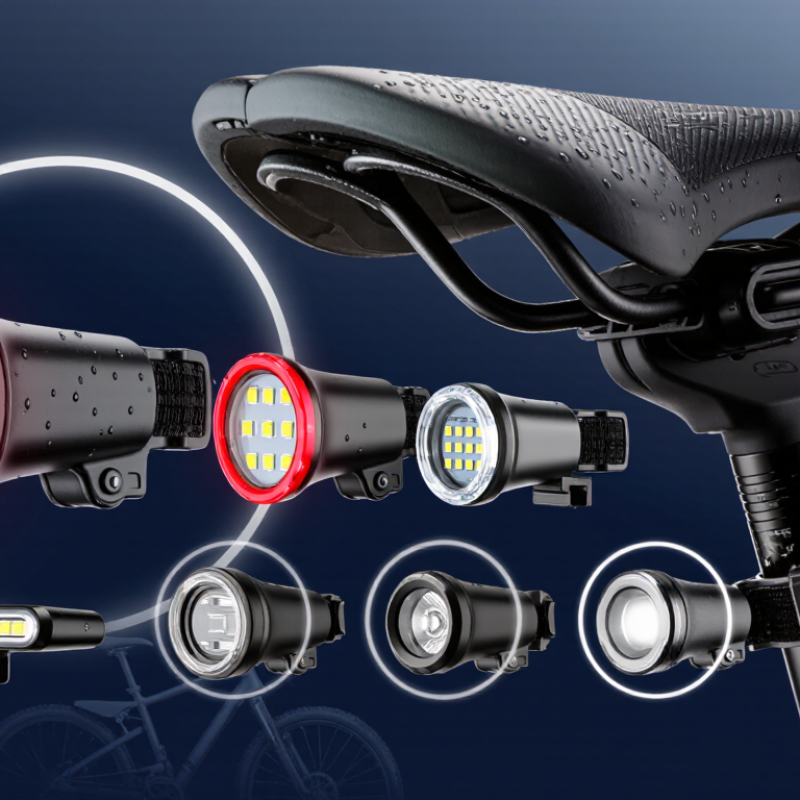
What Are the Best COB Rear Bike Lights in 2026?

What COB Technology Means in Rear Bike Lights

COB (chip-on-board) technology places many small LED chips close together on one circuit board. The result is a broad, fairly even glow rather than a few distinct points. On a rear bike light, that glowing surface can be easier to notice from different viewing angles. It may also look more continuous when the light flashes. Small detail, big difference.

COB alone does not tell you how effective a rear light will be. Lens shape, brightness, flash pattern, and mounting position all affect what other road users can see. A bright light aimed at the ground may be less visible than a moderate one mounted upright on a seatpost or rear rack. Check that the light stays steady over rough pavement, and inspect its mount for movement. It is easy to overlook.

Battery life matters, too. High output can drain a small battery quickly, while prolonged use may warm the casing. Compare runtime at the mode you expect to use, not only the maximum setting. A wide glow can seem impressive in a dark room, yet surrounding streetlights may reduce its contrast outdoors. I would treat COB as a useful design feature, not a guarantee of visibility. A rear light still needs a clear line of sight and a secure, properly aimed position.

How to Evaluate COB Rear Bike Lights in 2026

When evaluating COB rear bike lights in 2026, look beyond advertised lumens. COB LEDs form a broad light surface, but brightness alone cannot show how clearly drivers see you from behind or from the side. Check the beam at road height, then view it from several angles in daylight and darkness. Numbers need context.

Test each flash and steady mode with a stopwatch. Record runtime, charging time, and whether brightness fades near battery depletion. NHTSA’s Traffic Safety Facts reported 1,105 bicyclist deaths in 2022 and 1,166 in 2023. These figures describe U.S. traffic deaths; they do not prove that any particular light prevents a crash. They do, however, make visibility worth examining carefully.

Check that the mount stays firm on a vibrating seatpost, and inspect the charging-port cover after wet-weather use. Treat water-resistance claims cautiously unless a test method or IP rating is documented. A useful comparison records distance, angle, ambient light, and battery state. It is not a perfect lab test. Still, repeatable checks are more useful than a quick glance at a box. Keep the light visible when a bag, jacket, or seat pack could block it.

How to Evaluate COB Rear Bike Lights in 2026

Suggested 100-point evaluation rubric—not measured scores for specific products. Prioritize visibility and side visibility, then assess runtime, weather resistance, mounting security, and ease of use under consistent test conditions.

Key Features That Distinguish Leading Models

What Are the Best COB Rear Bike Lights in 2026?
Key Features That Distinguish Leading Models

A strong COB rear light uses a wide, evenly lit panel rather than a single bright-looking point. That can make the light easier to notice across different viewing angles, though COB alone does not guarantee better visibility. Compare tested brightness, lens design, and side visibility. Check whether the maker reports output in lumens and gives runtime for each mode; maximum brightness often drains a small battery quickly. Short pulse options can help conserve power. Very bright flashes may still feel distracting in traffic.

Mounting and reliability matter on real rides. Look for a firm seatpost strap, a clear battery indicator, and water-resistance details backed by a stated test rating. NHTSA’s Traffic Safety Facts for 2022 recorded 1,105 bicyclists killed in U.S. traffic crashes. That figure is not proof that one light prevents crashes, but it underscores why dependable visibility deserves attention. Check that the lamp stays aligned over rough pavement. Then test it from behind and from the side, preferably in daylight and at dusk. Small detail. A few specifications can be vague, and I would treat unverified runtime claims cautiously.

What Are the Best COB Rear Bike Lights in 2026? - Key Features That Distinguish Leading Models

A practical comparison of common COB rear-light feature profiles. Figures are indicative ranges, not specifications for particular products; actual performance varies by model and mode.

Feature Common range or options What distinguishes a leading design Best suited to
COB light source A closely packed LED array; layouts and emitting areas vary. A broad, even illuminated area can make the light easier to notice. COB construction alone does not guarantee greater brightness or visibility. Riders who want a clearly defined rear light signature.
Brightness Many compact rechargeable rear lights are rated from a few dozen to around 100 lumens, depending on mode. Look for clearly stated output by mode and a steady setting suitable for well-lit streets. A higher lumen figure is not, by itself, proof of better visibility in every direction. Commuters choosing between urban use and darker roads.
Lighting modes Typically includes steady and one or more flashing or pulsing modes. Useful mode choices make it easy to select a steady beam or a conspicuous daytime flash. Runtime should be listed separately for each mode. Riders who switch between daytime and nighttime riding.
Runtime and battery Runtime varies widely by battery capacity, brightness, and flash pattern; flashing modes commonly last longer than maximum-output steady modes. A useful specification gives mode-by-mode runtime and a clear low-battery indication. Treat maximum-runtime claims as mode-specific. Daily riders and people planning longer rides.
Side visibility Depends on the lens, LED placement, and housing; some designs expose light toward the sides. A wide-angle lens or visible side windows can help the light be seen from oblique angles, such as at junctions. City riders sharing roads with vehicles approaching from the side.
Mounting and fit Common options include a seatpost strap, a clip, or a bracket; fit depends on the bicycle and accessory setup. A secure, tool-free mount that stays aligned and accommodates the intended seatpost shape is more practical than a mount that shifts while riding. Riders who remove the light to prevent theft or recharge it indoors.
Charging Rechargeable models may use USB-C or another charging connector; charging time and cable requirements vary. A clearly accessible port and a standard cable can simplify charging. Check whether the light can operate while charging if that feature matters to you. Frequent riders who want to recharge from common USB power sources.
Weather protection Ingress ratings differ. For example, IPX4 indicates protection against splashing water; it does not mean the light is waterproof for immersion. Check the published IP rating and keep the charging-port cover properly closed in wet conditions, where applicable. All-weather commuters and riders caught in occasional rain.
Controls and indicators May include a single button, a lockout function, or battery and charging indicators. Simple mode changes and an indicator that is easy to interpret help prevent accidental activation and unexpected battery depletion. Riders who value quick checks and straightforward daily use.

Comparing Light Output, Battery Life, and Mounting Options

A COB rear light uses a dense panel of LED chips, creating a broad, even glow that can be easy to notice in traffic. But a high lumen figure alone does not guarantee good visibility. Check whether the lens spreads light sideways, and whether the light remains clear from common driver angles. A steady mode can suit lit streets; a flashing mode may stand out in daylight. Very rapid flashes can be tiring to follow. Small detail, big difference.

Battery life depends on the chosen mode, temperature, and battery capacity, so compare runtime figures only for matching settings. A light rated for many hours on low may last far less on its brightest setting. Look for a clear charge indicator, and test runtime before relying on it for a long ride. Cold mornings can shorten it, too. That catches people out.

Mounting affects both aim and security. A silicone strap is quick to fit around many seatposts, while a clip can work on a bag or rack. Check the post diameter and shape; some straps twist on narrow or aerodynamic posts. After fitting, give the light a firm tug and confirm it points straight back, not at the road. I’d still recheck it after bumpy rides.

Choosing a COB Rear Light for Your Riding Needs

What Are the Best COB Rear Bike Lights in 2026?
Choosing a COB Rear Light for Your Riding Needs

A COB rear light uses many small LED chips on one surface, creating a broad, even glow. That can help make your bike noticeable from behind and at an angle, though visibility still depends on placement, brightness, and surrounding traffic. Think about where you ride: a dimly lit path calls for a different setting than a busy street.

Check the fit. The light should sit securely on your seatpost or another compatible mounting point, without tilting toward the ground. A loose mount can shift over rough pavement. Look for clear brightness settings and a mode you can operate with gloves. Flashing modes may stand out, but fast-changing patterns can be distracting. More modes do not always mean a better light.

Battery life matters on longer rides. Compare the stated runtime with the setting you expect to use; maximum brightness often drains power faster. A low-battery indicator and a common charging connection can make upkeep easier. Check the weather-resistance details, too, rather than assuming every rear light handles heavy rain. One small limitation is easy to overlook: a powerful light aimed too high may bother people behind you. Test the angle before riding, and recheck it after adjusting the mount.

FAQS

What does COB mean in a rear bike light?

COB places many small LED chips close together on one circuit board. This creates a broad, fairly even glow.

Does COB automatically make a rear light more visible?

No. Lens shape, brightness, flash pattern, and mounting position also affect visibility. COB is useful, not a guarantee.

How should I check visibility from different angles?

View the light from behind and from the side, both in daylight and at dusk. Keep it near road height.

Are advertised lumens enough to compare lights?

No. Check beam shape, side visibility, and runtime in each mode. Brightness needs context.

How can I check battery performance?

Time each mode with a stopwatch. Note charging time and whether brightness fades as the battery runs low.

What should I look for in a mount?

Choose a firm strap that holds alignment on a seatpost or rear rack. Test it over rough pavement.

How can I assess water resistance?

Look for a stated test rating, and inspect the charging-port cover after wet rides. Claims can be vague.

What can block a rear light?

A bag, jacket, or seat pack may hide it. Check the line of sight before riding. Easy to miss.

Is a quick glance enough to judge a light?

Not really. Repeat checks at similar distances, angles, and battery levels. It is not a perfect lab test.

Conclusion

COB rear bike lights use closely arranged LED chips to create a broad, continuous-looking glow that can help make a cyclist more visible from behind. When evaluating options in 2026, consider more than brightness: look at how clearly the light can be seen in daylight and darkness, whether its modes suit different riding conditions, and how consistently it performs as the battery runs low. Useful features may include multiple flash and steady modes, a clear battery indicator, weather-resistant construction, and simple controls.

Compare light output with battery life, since brighter settings may require more frequent charging. Mounting options also matter: a secure, adjustable attachment should fit your bike and keep the light correctly positioned on varied routes. The best choice depends on how and where you ride. Commuters may prioritize dependable visibility and easy charging, while longer-distance riders may value extended runtime and flexible mounting. By weighing these factors together, you can choose COB rear bike lights that match your riding habits and practical needs.


Ethan

Ethan

Ethan is a professional marketing specialist dedicated to helping organizations communicate their value with clarity, accuracy, and purpose. With a deep understanding of the company’s products, services, and customer needs, he creates informative content that connects practical solutions with real......
