Finding the best China wholesale supplier for wearable LED safety lights requires more than comparing prices. Buyers must examine product design, factory experience, testing records, and communication quality. A bright light is not automatically a dependable one.
Practical evaluation starts with real samples. Check how the light clips onto a jacket, helmet, backpack, or running vest. Test visibility during dusk, rain, and low-temperature conditions. Inspect switch response, battery access, charging ports, and stitching around flexible LED strips. Ask suppliers for production photos, material details, quality-control procedures, and relevant test documentation. These steps reveal whether a factory understands daily safety use or simply repeats catalogue descriptions. Small details matter.
The strongest suppliers usually offer stable specifications, clear sampling processes, and consistent batch production. They should explain LED brightness, operating modes, battery life, water-resistance capability, packaging options, and private-label support without making vague promises. Buyers should also confirm minimum order quantities, lead times, replacement policies, and pre-shipment inspection arrangements. “Best” depends on the project. A distributor may value low minimum orders, while a safety-equipment brand may prioritize durability and traceable quality. Not every attractive sample survives mass production; that is an uncomfortable but important possibility. Careful buyers compare at least three suppliers, record test results, and request corrective action before placing a large order. With disciplined sourcing, wearable LED safety lights can become a reliable product line rather than a short-lived promotional item.
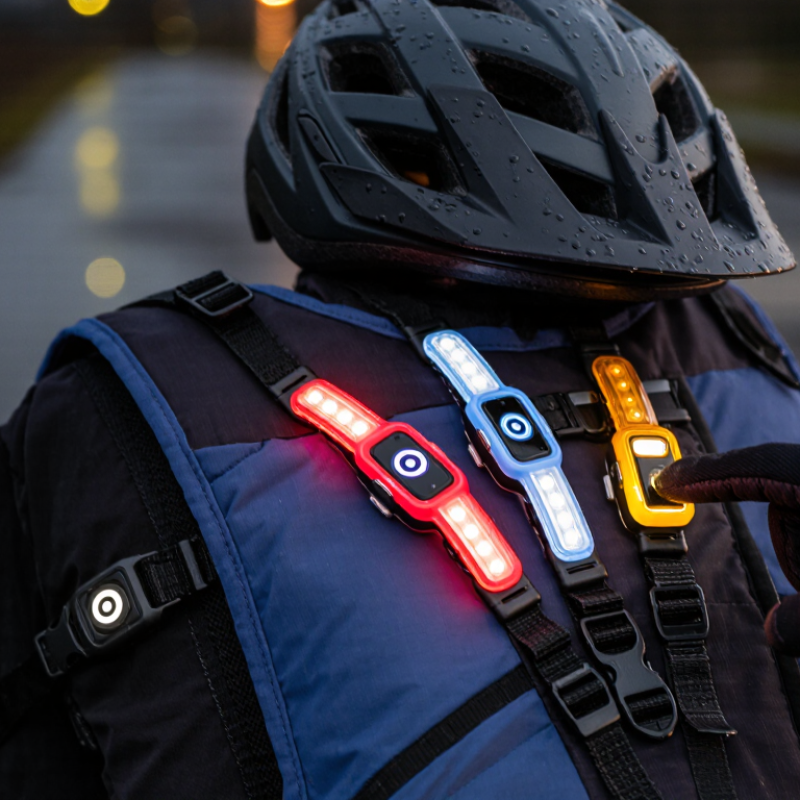
Wearable LED safety lights are compact lighting devices attached to clothing, bags, helmets, or wrists. They help people remain visible in low-light conditions. Unlike ordinary reflective strips, LEDs produce active light that can be seen from greater distances. Common forms include clip lights, armbands, shoe lights, and rechargeable safety vests.
In practical use, a runner may clip one to a jacket before dawn. A cyclist may wear a flashing light on the back. Outdoor workers often prefer steady illumination because it creates a clearer visual signal. Flashing modes can attract attention, but they may feel distracting in busy areas. From product testing experience, comfort matters as much as brightness. A light that slips, pinches, or loses power quickly will not be worn consistently. I once underestimated battery access, and that small mistake made daily charging inconvenient.
Tips: Check visibility from several angles. Choose a secure clip or adjustable strap. Confirm the light’s runtime before extended use. Water resistance is useful in light rain, but it does not always mean full waterproof protection. For wholesale buyers, inspect battery quality, switch durability, charging ports, and fit samples before placing a large order. Ask for clear technical data and independent testing records when available. Safety lighting is simple, yet small design details can affect real-world reliability.
Wearable LED safety lights are practical tools for improving visibility during cycling, jogging, walking, and outdoor work. For wholesale buyers in China, product quality depends on more than brightness. Look for efficient LEDs, steady light output, and several flashing modes. A rechargeable battery reduces waste, while a replaceable battery may suit remote users better. Water resistance, secure clips, and soft contact surfaces also matter. Small details often decide whether people wear the light every day.
Common types include clip-on lights, LED armbands, reflective vests, shoe lights, belt lights, and helmet-mounted units. Clip-on models work well on backpacks and jackets. Armbands suit runners because they move with the upper arm. Vests provide wider visibility across the torso. Shoe lights create noticeable movement, but they may need stronger fasteners. Check charging ports, switch operation, stitching, and battery performance before placing a large order. A bright product is not always a comfortable product.
Tips: Test samples at night and in light rain. Measure visibility from different angles. Ask for clear battery and material specifications. Check applicable safety standards for your target market. Avoid choosing only by the lowest price. It sounds obvious, yet this mistake still happens. Also, no wearable light removes every road risk. Users may forget charging, and flashing modes can feel distracting. A balanced design is usually more dependable than extreme brightness.
LED color selection affects visibility, signaling, and nighttime recognition. The chart shows approximate visible wavelength bands commonly used when designing wearable safety lighting.
Red and amber LEDs are commonly selected for warning and low-glare applications, while green and blue LEDs are useful for identification and attention signals. When sourcing wearable LED safety lights, also compare water resistance, battery type, runtime, mounting method, visibility modes, and compliance requirements.
China Best Wearable LED Safety Lights Wholesale?
How to Evaluate Wholesale LED Safety Light Suppliers
Choosing the best supplier requires more than comparing unit prices. In supplier reviews, I examine light output, battery runtime, charging cycles, and switching reliability. A warning light may look bright indoors but perform poorly in rain or dusty work areas. Ask for test reports, material specifications, and clear production records. Reliable suppliers should explain their quality-control process without vague promises.
Tips: Request samples from different batches. Test them during movement, low light, and light rain. Check whether clips, straps, and switches feel secure. Confirm LED visibility from several angles. Ask for battery data at the required flash mode, not only standby time. Verify applicable safety documentation for your target market. Small details matter.
A capable wholesale partner should offer traceable inspections, stable lead times, and practical after-sales support. Review the factory’s sampling process and confirm how defective units are replaced. A pilot order can reveal packaging errors, uneven brightness, or weak connectors before a larger purchase. I once focused too heavily on price and overlooked inconsistent charging ports. That mistake delayed delivery. Supplier evaluation is never perfect, so record test results and question every attractive claim. Clear communication also matters, especially when discussing custom colors, logos, packaging, or minimum order quantities.
Customization, compliance, and quality should guide every wholesale decision. IDC reported 537.6 million wearable devices shipped globally in 2024, an 11.7% annual increase. This growth raises expectations for reliable, comfortable safety accessories. Buyers can customize LED colors, flash patterns, battery types, straps, logos, and retail packaging. However, excessive customization may complicate testing and increase minimum order quantities. A cheaper quote can hide weaker batteries, uneven brightness, or poor switch durability.
Compliance depends on the destination market and product application. Check applicable requirements for RoHS, REACH, EMC, battery transport, and electrical safety. Products used with high-visibility clothing may also need review against ISO 20471 or ANSI/ISEA 107. These standards do not automatically cover every wearable light. Ask suppliers for traceable test reports from ISO/IEC 17025-accredited laboratories. Review IP ratings under IEC 60529, charging protection, thermal performance, and battery-cycle results. A polished sample is not enough. Real production can still vary.
Tips: Request a pre-production sample and a signed specification sheet. Measure brightness after repeated charging, not only on day one. Confirm color consistency across batches. Keep spare batteries and replacement straps in the supply plan. The first factory audit may feel reassuring, but it should not replace independent inspection.
Ordering wearable LED safety lights from China requires more than comparing unit prices. Visibility products should match the working environment, weather, and movement pattern. The U.S. Bureau of Labor Statistics recorded 1,724 fatal occupational transportation incidents in 2023. That figure supports careful visibility planning, not casual purchasing. For road users, the National Highway Traffic Safety Administration reported 7,522 pedestrian deaths in 2022. Buyers should request photometric details, battery specifications, charging-cycle data, and test reports before approving samples. Product descriptions alone are not reliable evidence.
Begin with a controlled sample order. Check brightness at different angles, switch durability, strap tension, charging time, and water resistance. Review packaging labels and lot numbers. A useful purchase file should include inspection photos, supplier declarations, production dates, and agreed replacement terms. For larger orders, divide deliveries into manageable lots. This reduces storage pressure and exposes quality changes earlier. I have found that low prices can hide inconsistent batteries or weak stitching. That lesson is easy to overlook.
Tips: Keep a 5–10% buffer for damaged or missing units. Store lights in a dry area, away from direct heat. Test every incoming batch, not only the first shipment. Track failure rates by lot and production date. If the supplier cannot explain a variation, pause replenishment. LED safety products are small, but supply mistakes can affect real people.
They help runners, cyclists, walkers, and outdoor workers stay visible in low-light conditions. They produce active light. Reflective material only reflects existing light.
Common options include clip lights, armbands, vests, shoe lights, belt lights, and helmet-mounted units. Clip lights suit jackets and backpacks. Armbands move visibly with a runner’s arm.
Not necessarily. Excessive brightness may feel distracting in crowded areas. A steady light can create a clearer signal for outdoor workers. Balanced visibility is often more practical.
Check the clip, strap, contact surface, switch, and battery access. The light should stay secure during movement. Comfort matters. A pinching strap may remain unused.
Confirm runtime for the exact flashing mode, not only standby time. Rechargeable batteries reduce waste. Replaceable batteries may suit remote locations better. Charging access also matters. I once underestimated it.
Water resistance may handle light rain, but it does not guarantee full waterproof protection. Test samples during light rain when possible. Do not assume.
Request samples from different batches and test them during movement and low light. Check visibility from several angles. Inspect connectors, stitching, switches, charging ports, and battery performance.
Ask for technical data, material specifications, test reports, and production records. Review inspection procedures, lead times, and defective-unit replacement policies. A pilot order can expose weak connectors or uneven brightness.
Avoid choosing only by the lowest price. Low cost may hide unstable charging ports, poor clips, or inconsistent brightness. I made that mistake once. The delivery was delayed.
No. Users may forget charging, choose weak attachment points, or feel distracted by flashing modes. These lights improve visibility, but they cannot replace careful movement and road awareness.
Wearable LED safety lights are compact, hands-free visibility tools designed to help people remain noticeable in low-light environments. They can be attached to clothing, bags, helmets, bicycles, or equipment, and commonly include clips, straps, reflective elements, steady or flashing modes, rechargeable or replaceable batteries, and weather-resistant designs. Different types serve various needs, including personal visibility lights, running and cycling lights, workwear attachments, and emergency identification accessories.
When choosing a wholesale supplier, buyers should assess brightness, battery performance, durability, production capacity, delivery reliability, and quality-control procedures. Customization options may include colors, housing shapes, light modes, packaging, and printed logos, while products should be tested for electrical safety, material quality, water resistance, and applicable market requirements. Successful wholesale purchasing also depends on clear product specifications, sample approval, minimum order planning, inventory management, and consistent communication. By evaluating both product performance and supplier reliability, businesses can build a stable supply of wearable LED safety lights that meets customer expectations and supports long-term sales.